Thursday, February 4, 2016

"Community Conditions" and How They Influence Your Ability to Make Healthy Choices

Have you ever tried to walk somewhere only to find out the sidewalk doesn't connect? Or isn't in the best shape? Or isn't there at all!? 

Have you ever been looking for a "healthy option" at your favorite restaurant and couldn't find any of them labeled? Then you chose the cobb salad because you thought, "well, there's lettuce, so its gotta be close," only to find out later it had more calories and fat than the cheeseburger? 

Have you quit smoking because you couldn't smoke inside your favorite bar or restaurant anymore and had to go out in the cold? How inconvenient!

These are all examples of how "community conditions" influence your ability to make healthy decisions for yourself. re:TH!NK's partners have been working over the last seven years to try to create an environment that enables healthy choices (its part of our mission statement). And that's REALLY important to understand in our work, in public health. 

Sometimes, the environment makes it easy to make healthy choices, like for example, the state smoke-free air law. Hundreds of people quit smoking because it just became too difficult to keep smoking. A big win for public health and the health of every one of those quitters!


However, sometimes its hard for people to make healthy choices because they aren't able to find them, or they don't exist at all. Individual responsibility for making healthy choices is only half of the picture. 

The conditions of our surroundings (our environment) is the other half. How we are able to interact with where we live impacts which healthy choices we can make, or what choices are even available. 

That's why we're trying to re-frame the conversation about the health of our communities from a portrait to a landscape. By seeing the whole picture, not just the people in the picture, we can work together to make it easier for people to make healthy choices.


Monday, February 1, 2016

#loveisrespect: Oshkosh Teen Dating Violence Awareness Month Event


February is Teen Dating Violence Awareness Month and organizations and individuals across the country are coming together to raise awareness and educate their communities about dating violence and what it means to be in healthy relationships.

Organizers of the Winnebago County Teen CCR (Coordinated Community Response) team plan to do just that on Tuesday, February 9 in Oshkosh at their second annual "It's Time to Talk: Share Your Voice" event showcasing 8th grade students' ideas about healthy relationships and a panel discussion from local experts and advocates. The mission of the Winnebago County Teen CCR team is to help teens secure safe and violence-free lives.

According to Christine Ann Domestic Abuse Services in Oshkosh, “dating violence is a pattern of behaviors used in a relationship to gain or maintain power and control over another person.” Dating violence includes any type of physical, verbal, emotional, psychological, and sexual abuse, unequal power in the relationship, and abuse that occurs online. Any person can experience dating violence and abuse or unhealthy relationship behaviors regardless of gender, sexual orientation, socioeconomic status, ethnicity, religion, or culture.

And dating violence occurs right here in Winnebago County. The 2014 Youth Risk Behavioral Survey (YRBS) showed that 6.7% of Winnebago County high school students, or about 354 students, have been hit, slapped, or physically hurt on purpose by a girlfriend or boyfriend in the past 12 months. Additionally, 10.4% of Winnebago County high school students, or about 550 students, indicated that they have been forced, either verbally or physically, to take part in a sexual activity, which exceeds to state average of 9.6%.

Winnebago County Teen CCR’s event will be held on Tuesday, February 9, 2016 from 6:00pm-7:30pm at Oshkosh North High School. The public is welcome to view the silhouettes created by local students and vote for their favorites. Following the contest, a presentation on dating violence, local resources and a panel discussion of local experts and advocates on dating violence trends in our community will begin.  The event is free and open to the public; however, the event will address teen dating violence and contain sensitive topics, so discretion is advised with young children.


Need Help?

If you or a loved one is in an abusive relationship, please get help.

  • Call Christine Ann Domestic Abuse Services’ 24-hour helpline at 920.235.5998 or 800.261.5998. Christine Ann is fortunate to have a Youth Services Team that has the right advocate to support children and teens.
  • Reach Counseling provides many support services and counseling programs, some free of charge.
  • UW Oshkosh has partnered with Reach Counseling to provide the Campus Violence Prevention Program (CVPP). CVPP is a campus and community partnership that provides free and confidential legal, medical, and personal advocacy to students, staff, and faculty of the University who have experienced sexual abuse, dating violence, sexual harassment and/or stalking. CVPP educates students, staff, and faculty about intimate violence, its impact on the community, and healthy relationships.
    • 24-hour sexual assault crisis line: 920-722-8150
    • 24-hour dating/domestic violence crisis line: 920-235-5998
    • E-mail: huskeyk@uwosh.edu, (Katie Huskey, Campus Victim Advocate)
  • Aurora Medical Center's S.A.N.E. (Sexual Assault Nurse Examiner) program provides medical evaluations, emotional support, and assistance in reporting the crime and testifying in court. Help in Oshkosh is available 24-hours a day at 920-456-7420.
  • Text “loveis” to 22522, Love is Respect’s confidential texting service.


Monday, January 25, 2016

National Drug Facts Week


Each year, the National Institute on Drug Abuse (NIDA), hosts National Drug Facts Week, a national health week for teens. It uses information from NIDA and the National Institute on Alcohol Abuse and Alcoholism (NIAAA) to help teens Shatter the Myths about drugs. To find out more information about Shattering the Myths please click here.

Teens are bombarded with conflicting messages that can leave them feeling confused and unsure of who to ask for information about drug use. With 15% of 12th graders reporting abuse of prescription drugs in the past year and 22.7% reporting use of marijuana in the past month, there is no better time than now to help teens understand the serious consequences of drug use. (Monitoring the Future Study)

Tomorrow, January 26th, NIDA will be hosting their annual chat day. This chat day allows high school students throughout the nation to get their questions answered about drugs and drug abuse by NIDA scientists. We will also be posting facts and information on our Facebook and Twitter pages throughout the week.

Friday, January 15, 2016

How to (Realistically) Improve Your Health in 2016

It’s the beginning of a new year, so that means our New Year resolutions are fresh in our minds. For most of us, our resolutions include something to do with getting healthier. Resolutions such as losing weight, exercising, and quitting smoking are among the most common resolutions made each year. Unfortunately, by the time Valentines Day rolls around, most of us have forgotten or given up on our goals completely. This year, I challenge you throw away the age-old “lose weight” resolution, and try a different approach to improve your health holistically in 2016. Here are some resolutions to consider this year:

1. Eat 1 serving of vegetables with every meal. 


Often times, resolutions follow along the lines of “stop eating junk food, cut out added sugar, and no more trips through the drive-thru.” While these resolutions are important and get a thumbs-up from our doctors, temptation often gets the best of us. These resolutions are easily broken and forgotten. So this year, let’s shift the focus from what we are eating (junk food, sweets, etc.) to what we are not eating (fresh fruits and vegetables).

We all know that consuming sugary and fatty treats is bad for our health, but many people do not realize that not consuming enough fruits and vegetables is just as bad. Here is an example:

Last year, your typical dinner was a hamburger and fries. In order to follow your resolution to“eat healthier” this year, you swapped out the burger for a chicken breast and the fries for baked chips. This new meal is definitely healthier, being lower in saturated fat, salt, calories. However, it is not balanced. Your diet is still lacking the essential vitamins and minerals that are naturally-occurring in fruits and vegetables.

Vegetables contain essential vitamins and minerals that our body needs to function. There are certain vitamins found in plants that are essential for our metabolism. Therefore, consuming enough fruits and vegetables a day ensures that our bodies are functioning optimally and are metabolizing our food properly. If you cut out only “junk food,” and fail to eat fruits and vegetables, your body will remain malnourished.

Instead of cutting out food from your diet, try focusing on adding the right food to our diet. Doesn’t that sound a bit easier and more enjoyable?

2. Quit Smoking.

If you are smoker, the very best thing you can do for your health this year is to quit. If there is one healthy resolution to pick, this is the one.


The new year is a great time to quit tobacco and when you're ready to quit tobacco, the WI Tobacco Quit Line is ready to help. Callers will talk with a friendly quit coach, receive a FREE two-week supply of quit-tobacco medication along with personalized strategies on how to quit. Make this your year. When you’re ready to quit tobacco, the WI QuitLine is there, 24 hours a day. Just call 1-800 QUIT-NOW (1-800-784-8669).


3. Unplug.

Life can get stressful. It can be overwhelming. With modern technology, it seems we are always connected to each other. Phones, text message, email, and Facebook makes it possible to get ahold of anyone at virtually any time.


When is the last time you physically ‘turned off’ your cellphone?  How long can you go without checking for messages?

I challenge you to unplug this year—just for one hour a day. It can be the first or last hour of your day, or right in the middle to recollect your thoughts. By unplugging for an hour, you will have time to focus on your current state of mind and well-being.

4.Get involved.

How does being involved in your community make you healthier? This resolution is often not associated with health, but in fact, belonging to and getting involved in your community is an important aspect of living a longer, healthier life. Having a sense of belonging in your community often improves your mental health and encourages a healthy lifestyle. So this year, make a point of getting to know your community.

Want to get involved, but don’t know where to start? Check out our re:TH!NK Website for opportunities to volunteer.

Monday, December 21, 2015

Safe Holiday Drinking

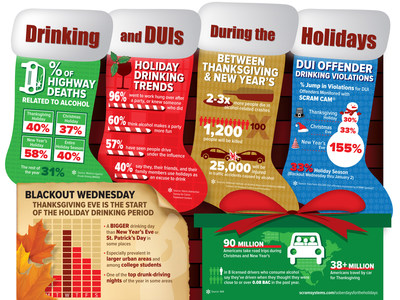
The holiday season is a wonderful time to reconnect with your family and friends, and celebrate what truly matters most. Many of these celebrations involve alcohol, and more people are likely to drink beyond their limits during these celebrations. Drinking beyond your limits could have serious consequences ranging from fights to falls to traffic crashes to fatalities. Here are some ways to have a safe holiday season.

Know the effects of alcohol
Alcohol initially acts as a stimulant, and this causes people to feel upbeat and excited.  However, alcohol will also decrease inhibitions and judgement which can lead to poor decision making. Alcohol can also affect people’s reaction time and balance which can lead to accidents. Some people may become aggressive. Alcohol primarily act as a depressant, hindering signals in the brain that control automatic responses such as the gag reflex. Continuing to drink despite clear signs of significant impairments can result in a potentially deadly type of overdose called alcohol poisoning (NIAA). Symptoms of alcohol poisoning are mental confusion, inability to wake up, vomiting changes in breathing, seizures and hypothermia. Blackouts can occur when someone is severely intoxicated. Blackouts cause a person to have periods of amnesia and they do not remember what happened while they were drinking.

Know your limit
Everyone can tolerate a different amount of alcohol. With that being said, there are some standards put in place by the National Institute on Alcohol Abuse and Alcoholism. The standard for women is no more than 3 drinks on any day and no more than 7 drinks per week. The standard for men is no more than 4 drinks on any day and no more than 14 drinks per week (NIAAA).


Have “drink spacer” and pace yourself
Having a non-alcoholic drink between each alcoholic one has a couple of benefits. You are not getting impaired as quickly, and you are controlling what you are drinking. You are also more likely to keep to the 3 or 4 drink limit depending.

Always have plans to get home safe 
According to recent studies, the holiday season is one of the most dangerous time of the year for drunk driving and alcohol-related fatalities (Alcohol Monitoring Systems). Have a designated driver or a taxi take you home if you will be drinking.


Have a safe and happy holiday!