
Monday, June 20, 2016

Thursday, February 4, 2016
"Community Conditions" and How They Influence Your Ability to Make Healthy Choices

Have you ever been looking for a "healthy option" at your favorite restaurant and couldn't find any of them labeled? Then you chose the cobb salad because you thought, "well, there's lettuce, so its gotta be close," only to find out later it had more calories and fat than the cheeseburger?
Have you quit smoking because you couldn't smoke inside your favorite bar or restaurant anymore and had to go out in the cold? How inconvenient!
These are all examples of how "community conditions" influence your ability to make healthy decisions for yourself. re:TH!NK's partners have been working over the last seven years to try to create an environment that enables healthy choices (its part of our mission statement). And that's REALLY important to understand in our work, in public health.
Sometimes, the environment makes it easy to make healthy choices, like for example, the state smoke-free air law. Hundreds of people quit smoking because it just became too difficult to keep smoking. A big win for public health and the health of every one of those quitters!
However, sometimes its hard for people to make healthy choices because they aren't able to find them, or they don't exist at all. Individual responsibility for making healthy choices is only half of the picture.
The conditions of our surroundings (our environment) is the other half. How we are able to interact with where we live impacts which healthy choices we can make, or what choices are even available.
 That's why we're trying to re-frame the conversation about the health of our communities from a portrait to a landscape. By seeing the whole picture, not just the people in the picture, we can work together to make it easier for people to make healthy choices.
The conditions of our surroundings (our environment) is the other half. How we are able to interact with where we live impacts which healthy choices we can make, or what choices are even available.
 That's why we're trying to re-frame the conversation about the health of our communities from a portrait to a landscape. By seeing the whole picture, not just the people in the picture, we can work together to make it easier for people to make healthy choices.
Monday, February 1, 2016
#loveisrespect: Oshkosh Teen Dating Violence Awareness Month Event

February is Teen Dating Violence Awareness Month and organizations and individuals across the country are coming together to raise awareness and educate their communities about dating violence and what it means to be in healthy relationships.
Organizers of the Winnebago County Teen CCR (Coordinated Community Response) team plan to do just that on Tuesday, February 9 in Oshkosh at their second annual "It's Time to Talk: Share Your Voice" event showcasing 8th grade students' ideas about healthy relationships and a panel discussion from local experts and advocates. The mission of the Winnebago County Teen CCR team is to help teens secure safe and violence-free lives.

According to Christine Ann Domestic Abuse Services in Oshkosh, “dating violence is a pattern of behaviors used in a relationship to gain or maintain power and control over another person.” Dating violence includes any type of physical, verbal, emotional, psychological, and sexual abuse, unequal power in the relationship, and abuse that occurs online. Any person can experience dating violence and abuse or unhealthy relationship behaviors regardless of gender, sexual orientation, socioeconomic status, ethnicity, religion, or culture.
And dating violence occurs right here in Winnebago County. The 2014 Youth Risk Behavioral Survey (YRBS) showed that 6.7% of Winnebago County high school students, or about 354 students, have been hit, slapped, or physically hurt on purpose by a girlfriend or boyfriend in the past 12 months. Additionally, 10.4% of Winnebago County high school students, or about 550 students, indicated that they have been forced, either verbally or physically, to take part in a sexual activity, which exceeds to state average of 9.6%.
Winnebago County Teen CCR’s event will be held on Tuesday, February 9, 2016 from 6:00pm-7:30pm at Oshkosh North High School. The public is welcome to view the silhouettes created by local students and vote for their favorites. Following the contest, a presentation on dating violence, local resources and a panel discussion of local experts and advocates on dating violence trends in our community will begin. The event is free and open to the public; however, the event will address teen dating violence and contain sensitive topics, so discretion is advised with young children.

Need Help?
If you or a loved one is in an abusive relationship, please get help.- Call Christine Ann Domestic Abuse Services’ 24-hour helpline at 920.235.5998 or 800.261.5998. Christine Ann is fortunate to have a Youth Services Team that has the right advocate to support children and teens.
- Reach Counseling provides many support services and counseling programs, some free of charge.
- UW Oshkosh has partnered with Reach Counseling to provide the Campus Violence Prevention Program (CVPP). CVPP is a campus and community partnership that provides free and confidential legal, medical, and personal advocacy to students, staff, and faculty of the University who have experienced sexual abuse, dating violence, sexual harassment and/or stalking. CVPP educates students, staff, and faculty about intimate violence, its impact on the community, and healthy relationships.
- 24-hour sexual assault crisis line: 920-722-8150
- 24-hour dating/domestic violence crisis line: 920-235-5998
- E-mail: huskeyk@uwosh.edu, (Katie Huskey, Campus Victim Advocate)
- Aurora Medical Center's S.A.N.E. (Sexual Assault Nurse Examiner) program provides medical evaluations, emotional support, and assistance in reporting the crime and testifying in court. Help in Oshkosh is available 24-hours a day at 920-456-7420.
- Text “loveis” to 22522, Love is Respect’s confidential texting service.

Monday, January 25, 2016
National Drug Facts Week

Each year, the National Institute on Drug Abuse (NIDA), hosts National Drug Facts Week, a national health week for teens. It uses information from NIDA and the National Institute on Alcohol Abuse and Alcoholism (NIAAA) to help teens Shatter the Myths about drugs. To find out more information about Shattering the Myths please click here.
Teens are bombarded with conflicting messages that can leave them feeling confused and unsure of who to ask for information about drug use. With 15% of 12th graders reporting abuse of prescription drugs in the past year and 22.7% reporting use of marijuana in the past month, there is no better time than now to help teens understand the serious consequences of drug use. (Monitoring the Future Study)
Tomorrow, January 26th, NIDA will be hosting their annual chat day. This chat day allows high school students throughout the nation to get their questions answered about drugs and drug abuse by NIDA scientists. We will also be posting facts and information on our Facebook and Twitter pages throughout the week.
Friday, January 15, 2016
How to (Realistically) Improve Your Health in 2016
It’s the beginning of a new year, so that means our New Year resolutions are fresh in our minds. For most of us, our resolutions include something to do with getting healthier. Resolutions such as losing weight, exercising, and quitting smoking are among the most common resolutions made each year. Unfortunately, by the time Valentines Day rolls around, most of us have forgotten or given up on our goals completely. This year, I challenge you throw away the age-old “lose weight” resolution, and try a different approach to improve your health holistically in 2016. Here are some resolutions to consider this year:
1. Eat 1 serving of vegetables with every meal.

Often times, resolutions follow along the lines of “stop eating junk food, cut out added sugar, and no more trips through the drive-thru.” While these resolutions are important and get a thumbs-up from our doctors, temptation often gets the best of us. These resolutions are easily broken and forgotten. So this year, let’s shift the focus from what we are eating (junk food, sweets, etc.) to what we are not eating (fresh fruits and vegetables).
We all know that consuming sugary and fatty treats is bad for our health, but many people do not realize that not consuming enough fruits and vegetables is just as bad. Here is an example:
Last year, your typical dinner was a hamburger and fries. In order to follow your resolution to“eat healthier” this year, you swapped out the burger for a chicken breast and the fries for baked chips. This new meal is definitely healthier, being lower in saturated fat, salt, calories. However, it is not balanced. Your diet is still lacking the essential vitamins and minerals that are naturally-occurring in fruits and vegetables.
Vegetables contain essential vitamins and minerals that our body needs to function. There are certain vitamins found in plants that are essential for our metabolism. Therefore, consuming enough fruits and vegetables a day ensures that our bodies are functioning optimally and are metabolizing our food properly. If you cut out only “junk food,” and fail to eat fruits and vegetables, your body will remain malnourished.
Instead of cutting out food from your diet, try focusing on adding the right food to our diet. Doesn’t that sound a bit easier and more enjoyable?
2. Quit Smoking.
If you are smoker, the very best thing you can do for your health this year is to quit. If there is one healthy resolution to pick, this is the one.

The new year is a great time to quit tobacco and when you're ready to quit tobacco, the WI Tobacco Quit Line is ready to help. Callers will talk with a friendly quit coach, receive a FREE two-week supply of quit-tobacco medication along with personalized strategies on how to quit. Make this your year. When you’re ready to quit tobacco, the WI QuitLine is there, 24 hours a day. Just call 1-800 QUIT-NOW (1-800-784-8669).
3. Unplug.
Life can get stressful. It can be overwhelming. With modern technology, it seems we are always connected to each other. Phones, text message, email, and Facebook makes it possible to get ahold of anyone at virtually any time.
When is the last time you physically ‘turned off’ your cellphone? How long can you go without checking for messages?
I challenge you to unplug this year—just for one hour a day. It can be the first or last hour of your day, or right in the middle to recollect your thoughts. By unplugging for an hour, you will have time to focus on your current state of mind and well-being.
4.Get involved.
How does being involved in your community make you healthier? This resolution is often not associated with health, but in fact, belonging to and getting involved in your community is an important aspect of living a longer, healthier life. Having a sense of belonging in your community often improves your mental health and encourages a healthy lifestyle. So this year, make a point of getting to know your community.
Want to get involved, but don’t know where to start? Check out our re:TH!NK Website for opportunities to volunteer.
1. Eat 1 serving of vegetables with every meal.

Often times, resolutions follow along the lines of “stop eating junk food, cut out added sugar, and no more trips through the drive-thru.” While these resolutions are important and get a thumbs-up from our doctors, temptation often gets the best of us. These resolutions are easily broken and forgotten. So this year, let’s shift the focus from what we are eating (junk food, sweets, etc.) to what we are not eating (fresh fruits and vegetables).
We all know that consuming sugary and fatty treats is bad for our health, but many people do not realize that not consuming enough fruits and vegetables is just as bad. Here is an example:
Last year, your typical dinner was a hamburger and fries. In order to follow your resolution to“eat healthier” this year, you swapped out the burger for a chicken breast and the fries for baked chips. This new meal is definitely healthier, being lower in saturated fat, salt, calories. However, it is not balanced. Your diet is still lacking the essential vitamins and minerals that are naturally-occurring in fruits and vegetables.
Vegetables contain essential vitamins and minerals that our body needs to function. There are certain vitamins found in plants that are essential for our metabolism. Therefore, consuming enough fruits and vegetables a day ensures that our bodies are functioning optimally and are metabolizing our food properly. If you cut out only “junk food,” and fail to eat fruits and vegetables, your body will remain malnourished.
Instead of cutting out food from your diet, try focusing on adding the right food to our diet. Doesn’t that sound a bit easier and more enjoyable?
2. Quit Smoking.
If you are smoker, the very best thing you can do for your health this year is to quit. If there is one healthy resolution to pick, this is the one.

The new year is a great time to quit tobacco and when you're ready to quit tobacco, the WI Tobacco Quit Line is ready to help. Callers will talk with a friendly quit coach, receive a FREE two-week supply of quit-tobacco medication along with personalized strategies on how to quit. Make this your year. When you’re ready to quit tobacco, the WI QuitLine is there, 24 hours a day. Just call 1-800 QUIT-NOW (1-800-784-8669).
3. Unplug.
Life can get stressful. It can be overwhelming. With modern technology, it seems we are always connected to each other. Phones, text message, email, and Facebook makes it possible to get ahold of anyone at virtually any time.
When is the last time you physically ‘turned off’ your cellphone? How long can you go without checking for messages?
I challenge you to unplug this year—just for one hour a day. It can be the first or last hour of your day, or right in the middle to recollect your thoughts. By unplugging for an hour, you will have time to focus on your current state of mind and well-being.
4.Get involved.
How does being involved in your community make you healthier? This resolution is often not associated with health, but in fact, belonging to and getting involved in your community is an important aspect of living a longer, healthier life. Having a sense of belonging in your community often improves your mental health and encourages a healthy lifestyle. So this year, make a point of getting to know your community.
Want to get involved, but don’t know where to start? Check out our re:TH!NK Website for opportunities to volunteer.
Monday, December 21, 2015
Safe Holiday Drinking
The holiday season is a wonderful time to reconnect with your family and friends, and celebrate what truly matters most. Many of these celebrations involve alcohol, and more people are likely to drink beyond their limits during these celebrations. Drinking beyond your limits could have serious consequences ranging from fights to falls to traffic crashes to fatalities. Here are some ways to have a safe holiday season.
Know the effects of alcohol
Alcohol initially acts as a stimulant, and this causes people to feel upbeat and excited. However, alcohol will also decrease inhibitions and judgement which can lead to poor decision making. Alcohol can also affect people’s reaction time and balance which can lead to accidents. Some people may become aggressive. Alcohol primarily act as a depressant, hindering signals in the brain that control automatic responses such as the gag reflex. Continuing to drink despite clear signs of significant impairments can result in a potentially deadly type of overdose called alcohol poisoning (NIAA). Symptoms of alcohol poisoning are mental confusion, inability to wake up, vomiting changes in breathing, seizures and hypothermia. Blackouts can occur when someone is severely intoxicated. Blackouts cause a person to have periods of amnesia and they do not remember what happened while they were drinking.
 Know your limit
Everyone can tolerate a different amount of alcohol. With that being said, there are some standards put in place by the National Institute on Alcohol Abuse and Alcoholism. The standard for women is no more than 3 drinks on any day and no more than 7 drinks per week. The standard for men is no more than 4 drinks on any day and no more than 14 drinks per week (NIAAA).

Have “drink spacer” and pace yourself
Having a non-alcoholic drink between each alcoholic one has a couple of benefits. You are not getting impaired as quickly, and you are controlling what you are drinking. You are also more likely to keep to the 3 or 4 drink limit depending.
Always have plans to get home safe
According to recent studies, the holiday season is one of the most dangerous time of the year for drunk driving and alcohol-related fatalities (Alcohol Monitoring Systems). Have a designated driver or a taxi take you home if you will be drinking.
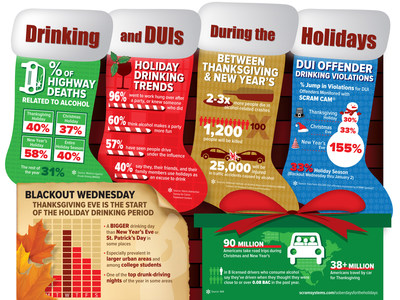
Have a safe and happy holiday!
Know the effects of alcohol
Alcohol initially acts as a stimulant, and this causes people to feel upbeat and excited. However, alcohol will also decrease inhibitions and judgement which can lead to poor decision making. Alcohol can also affect people’s reaction time and balance which can lead to accidents. Some people may become aggressive. Alcohol primarily act as a depressant, hindering signals in the brain that control automatic responses such as the gag reflex. Continuing to drink despite clear signs of significant impairments can result in a potentially deadly type of overdose called alcohol poisoning (NIAA). Symptoms of alcohol poisoning are mental confusion, inability to wake up, vomiting changes in breathing, seizures and hypothermia. Blackouts can occur when someone is severely intoxicated. Blackouts cause a person to have periods of amnesia and they do not remember what happened while they were drinking.

Everyone can tolerate a different amount of alcohol. With that being said, there are some standards put in place by the National Institute on Alcohol Abuse and Alcoholism. The standard for women is no more than 3 drinks on any day and no more than 7 drinks per week. The standard for men is no more than 4 drinks on any day and no more than 14 drinks per week (NIAAA).

Have “drink spacer” and pace yourself
Having a non-alcoholic drink between each alcoholic one has a couple of benefits. You are not getting impaired as quickly, and you are controlling what you are drinking. You are also more likely to keep to the 3 or 4 drink limit depending.
Always have plans to get home safe
According to recent studies, the holiday season is one of the most dangerous time of the year for drunk driving and alcohol-related fatalities (Alcohol Monitoring Systems). Have a designated driver or a taxi take you home if you will be drinking.
Have a safe and happy holiday!
Tuesday, December 8, 2015
Surviving Holiday Stress
Ah, the holidays. A time of joy, lights, festivities, and... stress.
 |
- Take four deep breaths. Close your eyes. Slowly inhale and exhale four times, making sure to completely exhale each time, pushing all the air out. If your thoughts wander, that's ok, just go back to focusing on your breathing. If you need some guidance, try inhaling and exhaling in sync with the video below. (Inhale as the shape grows larger, and exhale as it shrinks.)
 |
| (Source: ghostvvolfe) |
- Acknowledge your feelings. It's ok to feel whatever you're feeling. If you're feeling tense and stressed, acknowledge it and take some time to do what you need to do to comfort yourself. If you've recently lost a loved one or can't be with loved ones, know that it's ok to feel sadness or grief. Give yourself some time to cry or express your feelings.
- Make yourself a priority. Remember to schedule some "me" time and take care of yourself. Once you take care of yourself, you'll be better able to check off your "to-do" items.

- Don't abandon healthy habits. It may be tempting to indulge in all the cookies or the extra eggnog, but focusing on your health and sticking to your routine can be so important. Try eating a healthy snack before holiday parties so you don't go overboard. Or take a small amount of your "less healthy" favorites and a larger amount of the healthier options. Try going for a walk after a meal and remember to drink plenty of water.
- Stay tobacco free. The holiday season can also be especially challenging for those who are working to quit smoking or stay tobacco free. Remember, the WI QuitLine is here to help, just call 1-800-QUIT-NOW to talk with a coach and get free quit medication sent to you. It can make quitting (or staying quit) much less stressful this holiday season.

- If you know of someone who may be struggling during the holidays, reach out. Whether they've lost a loved one, are experiencing a lot of stress in their life, or are just having a tough time, be there for them. Express your concern and sympathy, really listen to them, and ask what you can do to help. It could be helping them with errands, going out to lunch, or just sitting with them. If you think they might be experiencing a mental illness, remind them that mental illnesses are treatable and that help is out there.
Whatever works for you, remember to stick to it! We all have mental health and we all need to work on staying mentally healthy. We can't be truly healthy without taking care of our mental health, so this holiday season, make sure to pay some attention to your brain and emotions and practice self-care!
Monday, November 23, 2015
Change "Holiday Blues" to "Holiday Greens!"
The holidays are upon us! Actually, I think they snuck up on
us this year. The amazingly beautiful fall weather has fooled us into thinking
we have more time to prepare! But now here we are. For many, the holidays are a
time that sabotages even our most concerted efforts to eat healthy, sometimes
sending us on a downward spiral, as our sugar, salt, and unhealthy fat
consumption increases, causing us to crave even more of the same. Ever heard of the holiday blues? How about
turning that trend upside down this year? Want to enjoy all the warm feelings
the holidays can bring, while avoiding these holiday pitfalls? I call this the “Holiday
Greens!” Prove to yourself that you can change your course by giving these tips
and tricks a try!

Whether you’re hosting or going to visit family and friends
for a holiday meal, being prepared can help you and everyone to feel better
while not feeling deprived. This first tip is very important: be sure to eat
something nutritious before you go to the party, or before your guests arrive! Showing up hungry will make it nearly impossible
for you to resist overeating. At a
minimum, have a piece of fruit or a small salad. Include a little protein as
well, such as a few nuts or seeds or a hard-boiled egg. Second, always prepare a
healthy favorite dish to share that you really enjoy. That way you know there will be something
“safe” for you to eat. And hopefully
others will appreciate and enjoy a healthy option too! And be sure to avoid grazing by the food
table all day. Fill a plate, taking a
small amount of your “less healthy” favorites so you don’t feel deprived….and
take a larger amount of the healthier choices (like the one that YOU brought!)
Think about it this way.
Fifteen minutes after your choice was made, how do you feel? If you ate anything and everything you
thought you wanted, are you still enjoying those foods fifteen minutes
later? Or are you feeling guilty or sick
to your stomach from over-indulgence?
Fifteen minutes after you ate a healthy plate, are you feeling satisfied and good about your choice? Most likely the answer is yes! So think about
jumping ahead and thinking about how you want
to feel in 15 minutes!
After the meal, try some herbal tea to warm you up and keep
your hands and your taste buds busy so you can leave the cookies or other
desserts for others. I saw a new tea at
the store this year that was egg-nog-flavored. Yum! So let others deal with the
regret, or the unwanted pounds, while you’re left feeling confident and pleased
with the choices you made. Or maybe
you’ll start a new trend, with a group of people supporting each other’s
health! Sometimes walking away from the
food, and getting a little fresh air and exercise outside, is enough to give
you motivation to resist. Drinking a
glass of water is another good choice, because thirst and dehydration can often
mask themselves as hunger.
See below for favorite recipes that I call "holiday greens
substitutions,” including avocado dip made with Greek yogurt, (double or
triple the dip for a party), or pumpkin pie made with a few key ingredient
changes. The Green Beans with Pine Nuts are amazing and popular in any crowd. Try mashed sweet potatoes for a beautiful
nutrient-rich alternative to potatoes. I like to grill my sweet potatoes until
the skin starts to blacken to bring out their natural sweetness, while adding a
little cinnamon and butter (as desired, but not needed). See below for
additional links to some of my favorite websites with alternative holiday recipes.
Spending just a little time planning is key to giving
yourself that edge to help resist temptation during the holidays. Bring healthy options for yourself and
others, eat before you go, and feel good
about yourself this holiday season!
Avocado Dip
Ingredients:
·
1 large peeled and pitted avocado
·
2/3 cup plain Greek yogurt
·
1 diced tomato
·
dash or two of cayenne pepper
·
sea salt and black pepper
Directions:
1.
Mash avocado with a fork until very smooth.
2.
Add yogurt, tomato, and cayenne. Blend until
smooth in a food processor or blender or with a fork.
3.
Add sea salt and fresh black pepper to taste.
4.
Serve chilled with raw vegetables.
Note: For best results, prepare a maximum of 1 hour before
serving, or add a little fresh squeezed lemon juice if holding a little longer.
Green Beans with Pine
Nuts (or Almonds)
Ingredients:
·
1 ½ pounds fresh green beans, washed and trimmed
·
2 Tablespoons extra virgin olive oil
·
2 cloves garlic, minced
·
1/3 cup pine nuts or slivered almonds
·
½ tsp salt
·
¼ tsp fresh ground black pepper
Directions:
1.
Add green beans to pot of boiling water. Cook al dente, about 3 minutes.
2.
Heat oil in large skillet over medium heat. Cook
garlic about 30 seconds. Add nuts and cook 3 minutes, stirring frequently.
3.
Drain beans and add to skillet, along with salt
and pepper. Toss to coat and serve.
Pumpkin Pie
Ingredients
Crust:
·
1 ¼ cups whole wheat pastry flour
·
1 stick cold butter
·
Generous pinch Salt
·
1 tablespoon Maple Syrup
·
2 – 3 T cold water
Filling:
·
2 eggs
·
1 (15 ½ oz) can pure pumpkin
·
1 cup milk, or almond or rice milk
·
½ cup
maple syrup
·
1 ½ tsp. ground cinnamon
·
1 tsp. freshly grated nutmeg
·
½ tsp. ground allspice
·
½ tsp. salt
·
1 tsp. vanilla extract
Instructions
- Preheat the oven to 400.
- In a bowl or food processor mix the butter, flour,
and salt until it resembles the texture of grated parmesan cheese.
- Add the cold water and maple syrup and mix until it
starts to come together in a ball.
- Roll the dough out on a lightly floured surface,
dusting the rolling pin with flour. Place into the pie plate.
- Finish edges. Prick with fork in several places. Line
with parchment paper or foil and weight with dried beans or rice. Place in
oven for about 10 - 12 minutes. Remove from oven and let cool. Lift
parchment or foil and weights and remove them from baked shell. Set aside.
- Reduce oven temperature to 350°.
- In a medium bowl whisk the filling ingredients
together
- When the crust is ready, add the filling
- Bake for about 40 minutes, or until the outer inch of the pie (nearest the crust) is firm.
Tuesday, November 10, 2015
Pause. Breathe. Take a Mental Wellness Break.
We all know the feeling: it’s getting colder and darker outside, we’re in the thick of school/midterms/projects/life, stores are playing holiday music before the last leaf has fallen, and the holiday season is right around the corner. It’s prime time for stress and a general feeling of being overwhelmed.

But what if we could take a break, even for two minutes, and just breathe? What if we could hit the pause button on all of the things on our to-do lists, maybe for five minutes, and we could just focus on ourselves?
I know, you’re busy. We're all busy! The thought of doing something nice for yourself can seem ridiculous when you have so many other people and things to think about. But if you don’t take care of yourself, even just every once in a while, it won’t be long before you’re exhausted and unable to care about anything or anyone, and then the to-do items will really pile up.
So in honor of Mental Health Wellness Week, let’s all commit to taking a few minutes to care for ourselves. Let’s literally make time on our calendars (I dare you, make an appointment on your calendar!), just five minutes a day, to take care of our bodies and minds. Regularly include in your life a little bit of love and attention for your own mind and body. It’s time to #treatyoself!
 The following ideas are tiny self-care activities you can fit into a short amount of time, usually with little cost. And I know, you might think that meditation or other mindfulness activities are strange or are only for hippies, but I encourage you to try at least one! Part of taking care of yourself is challenging yourself to try something new. (And you might be surprised- meditation is really a lot simpler than you might think!)


 Hopefully you were able to find at least a couple activities that helped you take a moment and bring yourself back to a comfortable state. One of the biggest things to remember when working on your mental wellness is that we all have difficulties with our mental health once in a while, and we are all in this together. If you are experiencing difficulties, you're not alone. Take it one step at a time, and don't be afraid or ashamed to ask for help. The road to mental wellness is ongoing and takes time, but every step you take, whether big or small, makes a difference!

But what if we could take a break, even for two minutes, and just breathe? What if we could hit the pause button on all of the things on our to-do lists, maybe for five minutes, and we could just focus on ourselves?
I know, you’re busy. We're all busy! The thought of doing something nice for yourself can seem ridiculous when you have so many other people and things to think about. But if you don’t take care of yourself, even just every once in a while, it won’t be long before you’re exhausted and unable to care about anything or anyone, and then the to-do items will really pile up.
So in honor of Mental Health Wellness Week, let’s all commit to taking a few minutes to care for ourselves. Let’s literally make time on our calendars (I dare you, make an appointment on your calendar!), just five minutes a day, to take care of our bodies and minds. Regularly include in your life a little bit of love and attention for your own mind and body. It’s time to #treatyoself!

- Write down five things you're grateful for. Share one of those things with a friend or family member.
- Start a compliments file. Document the things you like about yourself and/or the great things people say about you to read later.
- Scratch off a "lurker" on your to-do list, something that’s been there for ages and you keep putting off.
- Have a "no electronics" night. Turn off your phone (or put it on airplane mode), and free yourself from the constant notifications of social media and email.
- Take a nature walk. Make sure to notice the trees, sky, and any animals you see.
- Go cloud-watching. Lie on your back, relax, and watch the sky.
- Take another route to work. Mixing up your routine in small ways creates new neural pathways in the brain to keep it healthy.
- Pay complete attention to something you usually do on autopilot, like brushing your teeth, driving, eating, or anything in your morning routine.
- Take a five minute break to laugh. Watch a funny cat video or listen to a stand-up comedian's podcast! (If you need some ideas, check out my personal favorite, Simon's Cat!)
- Fix a small annoyance at home that’s been nagging you—a lost button, a drawer that’s stuck, a light bulb that’s burned out.
- Punctuate your day with a mini-meditation with one minute of awareness of your thoughts, feelings, and sensations; one minute of focused attention on breathing; and one minute of awareness of the body as a whole.
- Do a mini-declutter. Recycle three things from your wardrobe that you don’t love or regularly wear.
- Get out of your comfort zone, even if it’s just talking to a stranger at the bus stop.
- Edit your social media feeds, and take out any negative people. You can just “unfollow” them; you don’t have to delete them.
- Oxygenate by taking three deep breaths. Breathe into your abdomen, and let the air puff out your stomach and chest. Then breathe out fully through your mouth, letting go of any air you may be holding in. (If you're looking for some guided mindfulness exercises, check out http://www.freemindfulness.org/download, where you can download free audio files!)
- Dance around! Consider this your cue for a silly impromptu dance party. (Five bonus points if you do it out in public!)
- Stretch out the kinks. If you’re at work, you can always head to the bathroom to avoid strange looks.
- Run (or walk, depending on your current physical health) for a few minutes. Or go up and down the stairs three times.
- Activate your self-soothing system. Stroke your own arm, or if that feels too weird, put on some hand lotion.
- Spend one minute with your eyes closed, paying attention to your breathing and how your body feels.
- Make one small change to your diet for the week. Drink an extra glass of water each day, or have an extra portion of veggies each meal.
- Let your worries go. Write down some of your worries and thoughts on a piece of paper and literally crumple the paper up and throw it away.
- Be still. Sit somewhere green, and be quiet for a few minutes.
- Get fifteen minutes of sun, especially if you’re in a cold climate. (Use sunscreen if appropriate.)
- Inhale an upbeat smell. Try peppermint to suppress food cravings and boost mood and motivation, or citrus to relieve stress and tension.
- Take a quick nap. Ten to twenty minutes can reduce your sleep debt and leave you ready for action.
- Imagine you’re your best friend. If you were, what would you tell yourself right now? Look in the mirror and say it.

- Use your commute for a “Beauty Scavenger Hunt.” Find five unexpected beautiful things on your way to work.
- Help someone. Carry a bag, open a door, or pick up an extra carton of milk for a neighbor.
- Check in with your emotions. Sit quietly and just name without judgment what you’re feeling.
- Stroke a pet. If you don’t have one, go to the park and find one. (Ask first!) Or consider finding a "puppy swarm"...
- Make a small connection. Have a few sentences of conversation with someone in customer service such as a sales assistant or barista.
- Call someone close to you and tell them how much you appreciate them. Thanking them for their support can boost your mood and theirs.
- Have a self-date. Spend an hour alone doing something that nourishes you (reading, your hobby, visiting a museum or gallery, etc.)
- Exercise a signature strength. Think about what you’re good at, and find an opportunity for it today.
- Take a home spa. Have a long bath or shower, sit around in your bathrobe, and read magazines.
- Ask for help—big or small, but reach out.
- If you want to talk to someone 24/7 at a center near you, call the National Suicide Prevention Lifeline at 1-800-273-8255, no matter what problems you're dealing with.

- If you are located in Calumet, Fond du Lac, Green Lake, Manitowoc, Marquette, Outagamie, Sheboygan, Waushara, Waupaca or Winnebago counties in Northeast Wisconsin, you can also call 2-1-1 to access the United Way's Resource Directory to get information on mental health and many other resources and help in your area.

Friday, October 30, 2015
Trick-or-TREAT

Halloween is here! Every child looks forward to this day each year—the costumes, the parties, and, most importantly, the candy! Halloween has become a week-long event. I remember when I was growing up, I would go trick-or-treating not only in my neighborhood, but each of the surrounding neighborhoods that held their event at a different time. By the end of the holiday, I would have at least two of those pumpkin pails filled to the brim with sugary treats. It was definitely enough candy to last through the year.
As an adult, there is a new day we look forward to….the day after Halloween! All candy goes on sale at Walgreen's, your kids go back to school so you can steal their treats, and your coworkers that over-prepared for the amount of trick-or-treaters they would actually have bring in their leftover candy.
However glorious this day may seem, it is not so good for your health. This huge amount of candy is scarier than Halloween itself!
Here are some spooky things to think about that will really creep you out this Halloween:
- Let’s first take a minute to think about how long your Halloween candy lasts you throughout the year. From personal experience, I would say that Halloween candy still tastes delicious until 6 months later, when Easter candy is out, and all I want is a Reese’s shaped like an egg. Now think about how long those bananas on your counter last. Maybe a week. Bananas are highly nutrient and water dense. Our bodies need these nutrients to survive, but so do the microbes that cause rot and decomposition in fruit! What is in chocolate that makes it stay fresh for so long?! Little-to-no water and A TON of sugar and preservatives—this combination is our microbe friends’ worst nightmare. They hate candy because they can’t survive on it…and guess what? We can’t either.
- Why do we love sweet and savory treats so much? It’s because, biologically, our bodies actually NEED sugar and salt to function. However (and this is a big however), in today’s world, we get more than enough sugar and salt in our diet. The desire for sugar and salt has become an ADDICTION. Don’t believe me? Check out the reactions of these kids when they are told that their parents ate all of there Halloween candy:
- Why do our bodies look physically worse after consuming a lot of simple sugars? The second week of November is usually about the time you start to notice physical and mental changes as a result from all that candy you’ve been consuming. You start getting acne, gain a little weight, your teeth start to rot, and you are having a hard time concentrating and falling asleep. All of these changes are a result of increased blood sugar.
- The sugar in your blood feeds the bacteria in your pores that result in acne.
- The acidity from the sugar does not mix well with the calcium in your teeth, so they start to rot.
- All of the energy from the sugar causes your cells to go into hyperactive mode, causing you to be fidgety and have a hard time concentrating.
Spooky stuff! Now that I’ve added to your Halloween terror of treats, here are some tricks on how to make Halloween a bit healthier:
- Limit candy to just Halloween. As of November 1st, toss the rest in the garbage.
- Strike a deal with your kids—for every piece of candy they turn in, they get points toward something awesome, like next year’s costume, a Christmas present, or fun family activity.
- Hand out something else to trick-or-treaters! Be a neighborhood celebrity and stand out. In my neighborhood, we have the house that hands out tennis balls, the house that hands out bubbles, and the house that hosts a haunted garage. All three are must-stops every year.
- Shorten your trick-or-treat route. Go trick-or-treating for half the time you usually do and then head to a haunted house, a corn maze, or go apple picking instead!
Happy Halloween!!
Wednesday, October 21, 2015
Family Meals a time to Talk, Listen, and Connect

- Studies have shown that family meals can reduce substance abuse and obesity rates in teens. Teens who eat meals with their family also felt more connected with their family.
- Mealtime can be an opportunity to talk, listen, and connect as a family. With this in mind, try to make mealtime pleasant and perhaps even fun. The Family Dinner Project is a great resource for conversation starters and dinner games. Save the homework discussion for later.
- If schedules are tight, try connecting as a family at breakfast or brunch on the weekend. There is no set amount of nights or times you should eat together as a family.
- If cooking meals is a chore, check out The Real Happy Hour’s Pinterest page for quick recipes. You can also get your children involved, this is another great time to talk, listen, and connect with them!
Thursday, October 8, 2015
Get Ready...Get Set...CRUNCH!
 This year, the Oshkosh Area School District is participating in the Great Lakes Great Apple Crunch and Food Day event on Thursday, October 22nd. All Oshkosh area public elementary schools, roughly 2,300 students, are anticipated to join. This is the 2nd year schools in Winnebago County have participated.
This year’s event is organized through a collaboration with Winnebago County’s AmeriCorps Farm to School Program, re:TH!NK, Winnebago’s Healthy Living Partnership, and Oshkosh School District’s Food Service Director, Peggy West. All local apples are provided by Todd Hanson, the owner of Apple Blossom Orchard and Market, in Black Creek, Wisconsin.
The Great Apple Crunch originated in 2012 in New York City, where 400,000 people took a bite out of a locally grown apple at the same time. The event raised awareness about eating healthier diets, saving the environment, supporting local growers and farmers, and increasing access and affordability of local produce. The Great Apple Crunch event is also connected to Food Day. Celebrated on October 24th, Food Day inspires Americans to change their diets and solve food related problems at a local, state, and national level.
Farm to School programs across the country are adopting the Great Apple Crunch event to encourage students to try and enjoy healthy locally grown food options at school and in their daily lives. Sarah Elliott, Wisconsin’s Farm to School Program Director, agreed with the cause, saying, “By crunching into an apple at noon, or a time that is best for you, you are showing your support for Farm to School and for Wisconsin farmers!”
Not only is the event raising awareness of Farm to School Programs and healthy nutrition, but it is also helping numerous local farmers across the state. Last year, Wisconsin farmers produced 42.3 million pounds of apples for local consumers, resulting in 78% of the state’s total utilized crop. Some locally grown apples one may find include: Cortland, Priscilla, Jonathan, Empire, Honeycrisp, Gala and McIntosh. For more information about locally grown produce in your area, please visit https://farmfresheastwi.org/.
re:TH!NK encourages you to support a nutritious lifestyle and locally grown produce by participating in the Great Apple Crunch Event on Thursday, October 22nd! To register your school or business, please visit their website or Facebook page. Pictures or videos can be tagged by using any of the following hashtags on Twitter or Facebook: #GreatAppleCrunch #FoodDay2015 #F2SMonth #WIAppleCrunch.
A special thanks to Farmer Todd and Apple Blossom Orchard and Market for their support of the Great Apple Crunch! For more information about Apple Blossom Orchard and Market, visit their website: http://www.appleblossom.farm/ or call (920) 993-7277.
Friday, August 14, 2015
ACEs: Understanding the Effects of Adverse Childhood Experiences
Lately, a lot of advocates and researchers in public health have been throwing around the latest buzz word, ACEs. After doing a quick internet search for “ACEs”, I came across news headlines like “Police, mental health team mobilize to reach kids witnessing violence” and “Pediatricians Screen Parents for ACEs to Improve Health of Their Kids” So what are ACEs and why do they seem to be the next big public health urgency? ACEs are potentially traumatic events that occur prior to the age of 18. These childhood experiences range from physical, emotional, or sexual abuse to parental divorce, domestic violence, parental mental illness, or the incarceration of a parent or guardian. The original study on ACEs took place from 1995 to 1997 by Kaiser Permanente with more than 17,000 participants. Participants completed a standardized physical exam and completed a survey with questions about childhood maltreatment, family dysfunction, and current health status and behaviors.
From this study, researchers developed a questionnaire to tally up an “ACE Score”, which is out of 10, and the questionnaire is available on the ACE website, or below:
The original ACE study in 1997 found that of the 17,000 participants, 87% of those had more than one ACE score. And one thing to note: the majority of these participants were white, middle- and upper-middle class, and college educated. So despite the stereotype that abuse and neglect predominately happen in lower income families and families of color, this study highlighted that abuse and neglect occurs in all classes, income levels, and races.
I’ll admit, I have a few ACEs. And I definitely understand the struggle of coming to terms and dealing with these experiences. However, as I’ve dug deeper into this research, I’ve become more aware of how prevalent ACEs are and that my experiences aren't very unique. According to the 2011-2012 Wisconsin ACE Brief, 58% of Wisconsin residents have experienced at least one ACE, with 14% experiencing 4 or more. Here in Winnebago County, more than 20% of residents have four or more ACEs, which makes us one of 13 counties across Wisconsin with this high of a statistic. This is such a prevalent issue, and it's unsettling to learn about how pervasive across the lifespan these childhood experiences can be.
I think it's common knowledge that experiencing trauma can cause immediate and serious health effects. However, many studies are showing there are also long-term health effects of experiencing trauma as a child. According to the CDC, adults with higher ACE scores are at higher risk for attempting suicide and developing depression, addiction, and other mental health issues. A 2014 study from the American Journal of Preventative Medicine, also showed higher rates of chronic conditions, like asthma and obesity, along with higher risk of smoking, liver disease, and coronary heart disease.
With 58% of Wisconsin residents experiencing at least one ACE and all of these health outcomes being linked to childhood trauma, addressing ACEs and working to reduce its prevalence could have huge positive impacts down the line. Many public health experts are stressing the importance and urgency of focusing on the healthy development of infants, children, and families.
And if you've made it this far into my blog post, you're probably even more curious about ACEs and what to do about them. So quick plug: re:TH!NK has an upcoming workshop on ACEs!

And I'd like to end on this: having multiple ACEs is not necessarily an end-all be-all. Having multiple traumatic experiences during childhood can significantly affect a person and may require a lot of healthy coping skills and support to get through. But there is such a thing as resiliency. There are people who can go through terrible events and somehow make it out okay. With proper support and services, people who have gone through multiple ACEs can bounce back like a rubber band. And there is a lot of emerging research being done on resiliency. Just in case the ACE questionnaire has you feeling discouraged, take a look at this "resilience" questionnaire, developed by early childhood service providers, pediatricians, psychologists, and health advocates of Southern Kennebec Healthy Start, Augusta, Maine, in 2006, and updated in February 2013. (Note that this questionnaire's purpose is limited to parenting education. It was not developed for research.) How many of these can you answer "true" to?
Resilience Questionnaire: For each statement, mark the most accurate answer, from: Definitely True, Probably True, Not Sure, Probably Not True, and Definitely Not True.

Resiliency research and focus may be the key in addressing ACEs and their effects on a person's health across the lifespan. Ensuring that children are able to answer "true" to at least a few of the statements above is critical in ensuring that everyone can lead healthy, happy lives. So let's get to it! (And come to our workshop on Sept. 14 if you're interested!)
From this study, researchers developed a questionnaire to tally up an “ACE Score”, which is out of 10, and the questionnaire is available on the ACE website, or below:
- Did a parent or other adult in the household often or very often…Swear at you, insult you, put you down, or humiliate you? Or act in a way that made you afraid that you might be physically hurt? If yes enter 1.
- Did a parent or other adult in the household often or very often... Push, grab, slap, or throw something at you? Or ever hit you so hard that you had marks or were injured? If yes enter 1.
- Did an adult or person at least 5 years older than you ever… Touch or fondle you or have you touch their body in a sexual way? Or attempt or actually have oral, anal, or vaginal intercourse with you? If yes enter 1.
- Did you often or very often feel that... No one in your family loved you or thought you were important or special? Or that your family didn’t look out for each other, feel close to each other, or support each other? If yes enter 1.
- Did you often or very often feel that... You didn’t have enough to eat, had to wear dirty clothes, and had no one to protect you? Or that your parents were too drunk or high to take care of you or take you to the doctor if you needed it? If yes enter 1.
- Were your parents ever separated or divorced? If yes enter 1.
- Was your mother or stepmother: Often or very often pushed, grabbed, slapped, or had something thrown at her? Or sometimes, often, or very often kicked, bitten, hit with a fist, or hit with something hard? Or ever repeatedly hit at least a few minutes or threatened with a gun or knife? If yes enter 1.
- Did you live with anyone who was a problem drinker or alcoholic or who used street drugs? If yes enter 1.
- Was a household member depressed or mentally ill, or did a household member attempt suicide? If yes enter 1.
- Did a household member go to prison? If yes enter 1.
The original ACE study in 1997 found that of the 17,000 participants, 87% of those had more than one ACE score. And one thing to note: the majority of these participants were white, middle- and upper-middle class, and college educated. So despite the stereotype that abuse and neglect predominately happen in lower income families and families of color, this study highlighted that abuse and neglect occurs in all classes, income levels, and races.
I’ll admit, I have a few ACEs. And I definitely understand the struggle of coming to terms and dealing with these experiences. However, as I’ve dug deeper into this research, I’ve become more aware of how prevalent ACEs are and that my experiences aren't very unique. According to the 2011-2012 Wisconsin ACE Brief, 58% of Wisconsin residents have experienced at least one ACE, with 14% experiencing 4 or more. Here in Winnebago County, more than 20% of residents have four or more ACEs, which makes us one of 13 counties across Wisconsin with this high of a statistic. This is such a prevalent issue, and it's unsettling to learn about how pervasive across the lifespan these childhood experiences can be.
 |
| Image via WI Children's Trust Fund, Wisconsin ACE Brief |
I think it's common knowledge that experiencing trauma can cause immediate and serious health effects. However, many studies are showing there are also long-term health effects of experiencing trauma as a child. According to the CDC, adults with higher ACE scores are at higher risk for attempting suicide and developing depression, addiction, and other mental health issues. A 2014 study from the American Journal of Preventative Medicine, also showed higher rates of chronic conditions, like asthma and obesity, along with higher risk of smoking, liver disease, and coronary heart disease.
 |
| Graphic courtesy of Veto Violence; click here for more graphics like this summarizing the ACE study |
With 58% of Wisconsin residents experiencing at least one ACE and all of these health outcomes being linked to childhood trauma, addressing ACEs and working to reduce its prevalence could have huge positive impacts down the line. Many public health experts are stressing the importance and urgency of focusing on the healthy development of infants, children, and families.
And if you've made it this far into my blog post, you're probably even more curious about ACEs and what to do about them. So quick plug: re:TH!NK has an upcoming workshop on ACEs!
What:
a re:TH!NK workshop:
ACE Interface Training
Understanding Adverse Childhood Experiences (ACEs):
Building Self-Healing Communities
Building Self-Healing Communities
Join us as we welcome two trainers from
Waupaca County Health & Human Services to provide this
free ACEs training!
Waupaca County Health & Human Services to provide this
free ACEs training!
When:
Monday, September 14 from 12:30pm-3:30pm
(Come after lunch or bring your own lunch!
Snacks and refreshments will be provided.)
Where:
Miron Construction, Wenzler Center
(1471 McMahon Drive, Neenah)
Resilience Questionnaire: For each statement, mark the most accurate answer, from: Definitely True, Probably True, Not Sure, Probably Not True, and Definitely Not True.
- I believe that my mother loved me when I was little.
- I believe that my father loved me when I was little.
- When I was little, other people helped my mother and father take care of me and they seemed to love me.
- I’ve heard that when I was an infant someone in my family enjoyed playing with me, and I enjoyed it, too.
- When I was a child, there were relatives in my family who made me feel better if I was sad or worried.
- When I was a child, neighbors or my friends’ parents seemed to like me.
- When I was a child, teachers, coaches, youth leaders or ministers were there to help me.
- Someone in my family cared about how I was doing in school.
- My family, neighbors and friends talked often about making our lives better.
- We had rules in our house and were expected to keep them.
- When I felt really bad, I could almost always find someone I trusted to talk to.
- As a youth, people noticed that I was capable and could get things done.
- I was independent and a go-getter.
- I believed that life is what you make it.

Resiliency research and focus may be the key in addressing ACEs and their effects on a person's health across the lifespan. Ensuring that children are able to answer "true" to at least a few of the statements above is critical in ensuring that everyone can lead healthy, happy lives. So let's get to it! (And come to our workshop on Sept. 14 if you're interested!)
Subscribe to:
Posts (Atom)